10 Ultra Low-Calorie Foods You Can Eat Without Limits
Discover which foods you can eat in large quantities without gaining weight. Foods with less than 30 kcal/100g.
Share:
📢Espacio publicitarioIn-Content Responsive
10 foods with the fewest calories
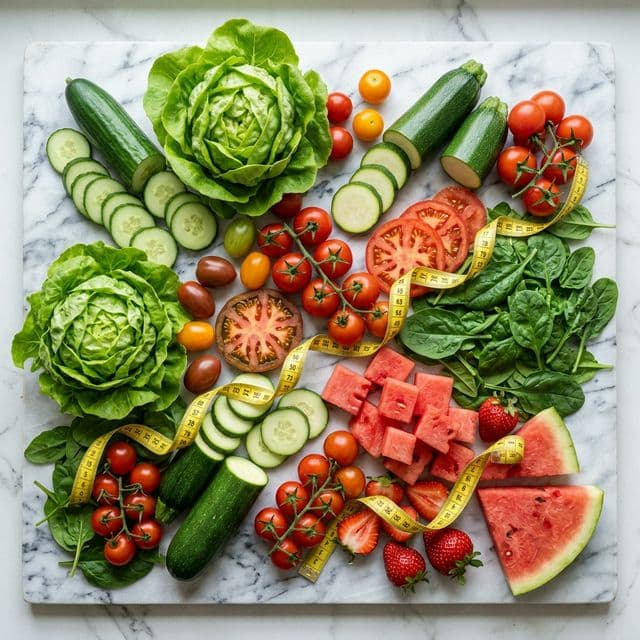
These foods have such a low caloric content (less than 35 kcal per 100g) that the energy your body spends digesting them is practically equal to what they provide. They're perfect for adding volume to your meals without adding significant calories.
- Cucumber — 15 kcal/100g: 96% water by composition. Ideal in salads, as a snack with hummus, or in infused water. Provides vitamin K and potassium.
- Lettuce — 15 kcal/100g: Perfect base for voluminous salads. Romaine variety provides more nutrients than iceberg.
- Zucchini — 17 kcal/100g: Extremely versatile: spirals (zoodles), creams, grilled, or stuffed and baked. Rich in vitamin C.
- Tomato — 18 kcal/100g: Rich in lycopene (powerful antioxidant). Better absorbed when cooked with a little olive oil.
- Spinach — 23 kcal/100g: Superfood with iron, folate, vitamin K, and lutein. You can eat huge amounts without worrying about calories.
- Cauliflower — 25 kcal/100g: Rice substitute (riced), pizza base, mash, or gratin. Provides cancer-fighting sulforaphane.
- Eggplant — 25 kcal/100g: Absorbs flavors very well. Roasted, as a side dish, or as a pasta alternative in lasagna.
- Watermelon — 30 kcal/100g: The most hydrating fruit (92% water). Rich in citrulline, an amino acid that improves blood flow.
- Red bell pepper — 31 kcal/100g: Contains more vitamin C than an orange (190mg vs 53mg per 100g). Great raw or roasted.
- Strawberries — 32 kcal/100g: Rich in antioxidants (anthocyanins) and vitamin C. Perfect as a naturally sweet dessert.
How to include them in your diet
- Voluminous salads: Combine lettuce + cucumber + tomato + bell pepper as the base of any meal.
- Guilt-free snacks: Cucumber, carrot, and celery sticks with hummus.
- Smart substitutes: Swap rice for riced cauliflower (saves ~100 kcal per serving).
- Soups and creams: Zucchini or cauliflower soups are very filling with few calories.
Important point
Just because a food is low in calories doesn't mean you should eat only that. Your body needs protein, healthy fats, and complex carbohydrates. Use these foods to add volume and satiety to meals that already contain essential nutrients.
📢Espacio publicitarioIn-Content Responsive
Was this article helpful?
Share:
![Top 20 High-Protein Foods per 100g [2026 Ranking]](/_next/image?url=%2Fimages%2Farticle-top20-proteinas.png&w=828&q=75)
![15 Superfoods You Should Eat in 2026 [With Real Data]](/_next/image?url=%2Fimages%2Farticle-superfoods.png&w=828&q=75)
![12 Healthy Snacks Under 200 Calories [Quick Ideas]](/_next/image?url=%2Fimages%2Farticle-snacks.png&w=828&q=75)