Complete Vegetarian Nutrition: How to Cover All Nutrients Without Meat
Complete guide for vegetarians and vegans. Complete proteins, iron, B12, omega-3 and meal planning.
Can you build a complete diet without meat?
Absolutely. A well-planned vegetarian or vegan diet can meet all nutritional needs and is associated with lower risks of heart disease, type 2 diabetes, and certain cancers. The key word is well-planned.
Protein: the main concern
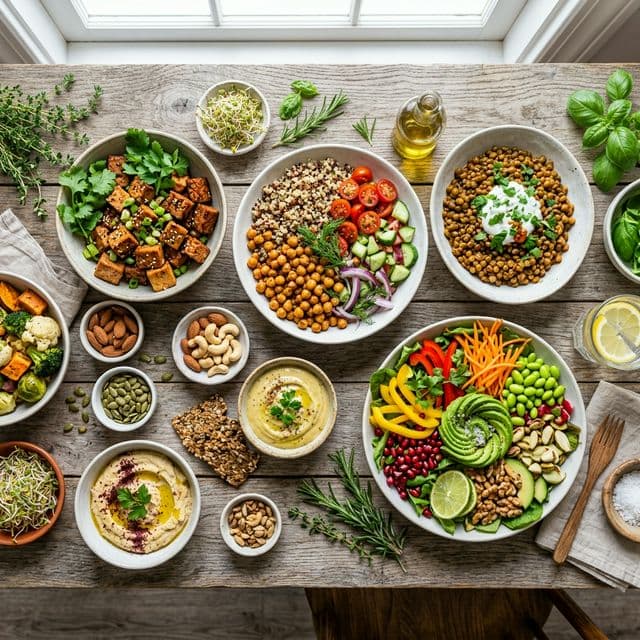
The challenge isn't getting enough protein — it's getting complete proteins (all 9 essential amino acids). Solutions:
| Combination | Result | Example |
|---|---|---|
| Legumes + grains | Complete protein | Lentils + rice |
| Legumes + seeds | Complete protein | Hummus (chickpeas + tahini) |
| Soy (alone) | Already complete | Tofu, tempeh, edamame |
| Quinoa (alone) | Already complete | Quinoa bowl |
Critical nutrients to monitor
Vitamin B12
Found exclusively in animal products. All vegans must supplement. Vegetarians who eat eggs and dairy may get enough, but monitoring is recommended. Dose: 250–500 mcg/day or 2000 mcg/week.
Iron
Plant iron (non-heme) has lower bioavailability than animal iron (heme). Boost absorption by pairing iron-rich foods with vitamin C. Best sources: lentils, chickpeas, tofu, spinach, pumpkin seeds.
Omega-3
EPA and DHA are found mainly in oily fish. Plant sources provide only ALA (flaxseeds, walnuts, chia), which converts inefficiently. Consider an algae-based omega-3 supplement.
Zinc
Phytates in legumes and grains reduce zinc absorption. Soak legumes before cooking and eat zinc-rich foods: pumpkin seeds, hemp seeds, cashews, whole grains.
Calcium (vegans)
Without dairy, prioritize: fortified plant milks, kale, bok choy, almonds, sesame seeds (tahini). Absorption is best from kale and bok choy (better than spinach due to lower oxalate content).
Sample day for vegetarians
- Breakfast: Oats + fortified oat milk + chia seeds + berries (420 kcal, 18g protein)
- Lunch: Lentil soup + quinoa + roasted vegetables (550 kcal, 28g protein)
- Snack: Greek yogurt (or fortified soy yogurt) + walnuts (220 kcal, 15g protein)
- Dinner: Tofu stir-fry + brown rice + broccoli + sesame oil (480 kcal, 25g protein)
Was this article helpful?
Preguntas Frecuentes
Yes, with planning. Combine legumes, tofu, tempeh, Greek yogurt, eggs, quinoa, and nuts throughout the day.
Vegans absolutely do. Vegetarians who eat eggs and dairy should monitor their levels, since dairy B12 absorption can be inconsistent.

![15 Superfoods You Should Eat in 2026 [With Real Data]](/_next/image?url=%2Fimages%2Farticle-superfoods.png&w=828&q=75)