Dietary Fiber Guide: Benefits, Sources and Daily Recommended Intake
Everything about fiber: types, how much you need per day, the 20 most fiber-rich foods and how to increase your intake without bloating.
Share:
📢Espacio publicitarioIn-Content Responsive
What is dietary fiber?
Dietary fiber is the indigestible part of plant foods. Unlike other carbohydrates, fiber cannot be broken down by human digestive enzymes — instead, it feeds your gut bacteria, slows glucose absorption, and bulks up stool.
Two types of fiber
| Type | Effect | Best sources |
|---|---|---|
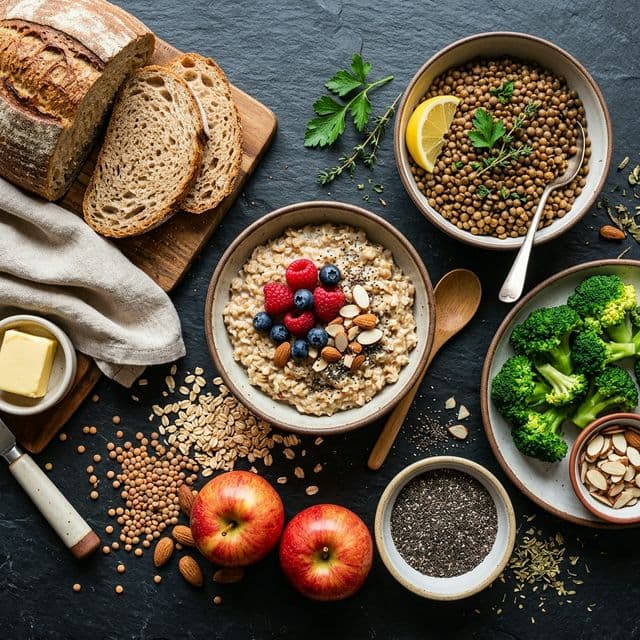
| Soluble | Dissolves in water, forms gel, slows digestion, lowers cholesterol | Oats, legumes, apples, chia seeds, flaxseeds |
| Insoluble | Doesn't dissolve, adds bulk, promotes bowel regularity | Whole grains, nuts, vegetables, wheat bran |
How much fiber do you need?
Recommendations by institution:
- WHO: 25g/day minimum for adults
- USDA (US): 25g/day (women), 38g/day (men)
- European guidelines: 25–35g/day
The average American eats only 15–17g/day — far below recommendations.
Top 20 highest-fiber foods (per 100g)
- Chia seeds — 34g
- Flaxseeds — 27g
- Psyllium husk — 80g (supplement)
- Almonds — 12g
- Black beans — 16g (cooked)
- Lentils — 8g (cooked)
- Avocado — 6.7g
- Artichoke — 5.4g
- Peas — 5g
- Raspberries — 6.5g
How to increase fiber without bloating
- Increase gradually: Add 3–5g per week. Sudden increases cause gas and bloating.
- Drink plenty of water: Fiber absorbs water. Without enough hydration, it can cause constipation instead of preventing it.
- Cook your legumes: Well-cooked legumes are easier to digest. Soaking beforehand also helps.
- Chew thoroughly: Mechanical digestion starts in the mouth and reduces digestive stress.
Proven benefits of adequate fiber intake
- Reduces LDL cholesterol (beta-glucan in oats)
- Stabilizes blood sugar — reduces risk of type 2 diabetes
- Feeds beneficial gut bacteria — supports immune function
- Promotes satiety and may aid weight management
- Reduces risk of colorectal cancer (strong evidence)
📢Espacio publicitarioIn-Content Responsive
Was this article helpful?
Preguntas Frecuentes
Ideally get fiber from food. If you consistently fall short, psyllium husk is well-studied and effective. Always drink extra water with supplements.
Share:


![8 Science-Backed Benefits of Oats [Properties and Recipes]](/_next/image?url=%2Fimages%2Farticle-overnight-oats.png&w=828&q=75)