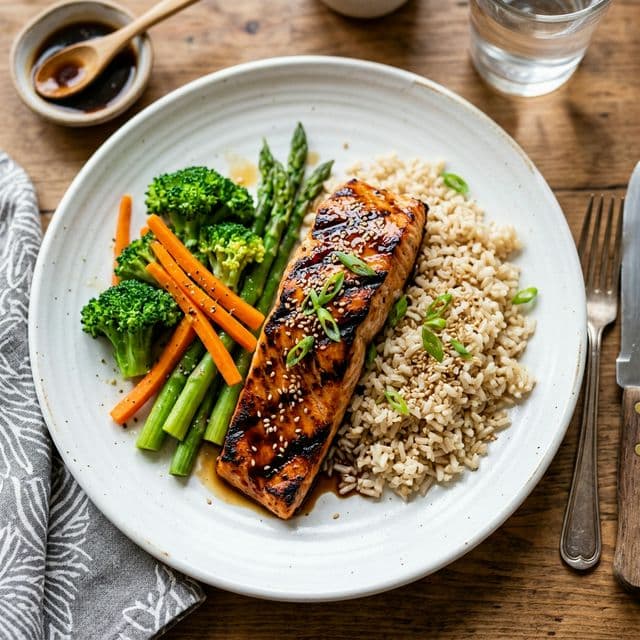
Healthy vs Unhealthy Fats: Complete Guide to Eating Well
Learn to distinguish good fats from bad ones. Mono, poly, saturated and trans: which you need and which to avoid.

The 4 types of dietary fat
| Type | Examples | Effect on health |
|---|---|---|
| Monounsaturated (MUFA) | Olive oil, avocado, almonds | ✅ Reduces LDL, raises HDL |
| Polyunsaturated (PUFA) | Salmon, walnuts, flaxseeds, sunflower oil | ✅ Omega-3 anti-inflammatory, omega-6 essential |
| Saturated | Butter, red meat, coconut oil, cheese | ⚠️ Raises LDL — context matters |
| Trans (industrial) | Partially hydrogenated oils, fried fast food | ❌ Raises LDL, lowers HDL — avoid completely |
The omega-3 to omega-6 balance
Both are essential — your body cannot make them. The problem is modern diets have an omega-6 to omega-3 ratio of 15:1 to 20:1, when the optimal ratio is closer to 4:1 or less. Excess omega-6 promotes inflammation.
- To increase omega-3: Fatty fish 2–3×/week, walnuts, flaxseeds, chia seeds, algae oil supplement
- To reduce omega-6: Less soybean, corn, and sunflower oil; fewer ultra-processed snacks
Best healthy fat foods
- Extra virgin olive oil: 73% oleic acid (MUFA), polyphenols — cornerstone of Mediterranean diet
- Avocado: Oleic acid + potassium + fiber + lutein
- Fatty fish (salmon, sardines, mackerel): EPA + DHA omega-3 — most bioavailable form
- Walnuts: Best plant source of omega-3 (ALA) + ellagic acid
- Almonds: MUFA + vitamin E + magnesium + fiber
- Dark chocolate (85%+): Oleic acid + stearic acid + flavonoids
How much fat to eat
General guidelines:
- Fat should comprise 25–35% of total daily calories
- At 2000 kcal/day: 56–78g of fat per day
- Prioritize unsaturated fats; limit saturated to <10% of calories; eliminate trans fat
Fat does not make you fat
Dietary fat doesn't directly cause body fat accumulation. Total caloric intake relative to expenditure determines body composition. Healthy fats are calorie-dense (9 kcal/g), so portions matter — but eliminating fat is unnecessary and counterproductive.
Was this article helpful?
Preguntas Frecuentes
In moderation (10–15g/day), butter in the context of an overall healthy diet is not a major concern. The issue is pattern, not individual foods.

![15 Superfoods You Should Eat in 2026 [With Real Data]](/_next/image?url=%2Fimages%2Farticle-superfoods.png&w=828&q=75)